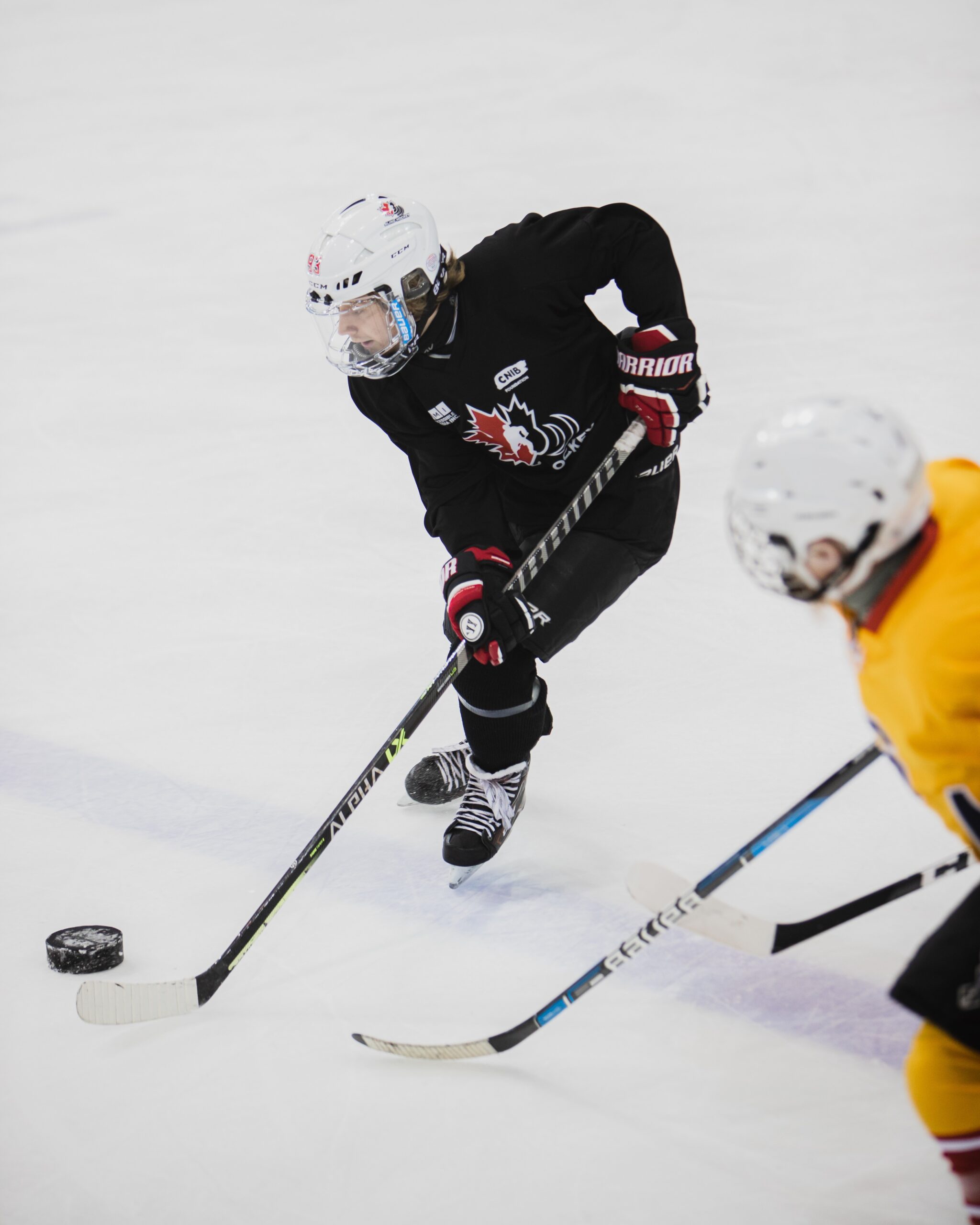
Growing up in Canada, hockey was more than a sport in our house; it was a feeling and the thing so many kids dreamed about from the moment they could hold a stick. My dad built an incredible backyard rink, and because of him, I was skating almost as soon as I could walk. I joined a league at six years old, and from that point on, hockey became my life. Like so many young Canadian kids, I pictured myself chasing that dream as far as it could take me. I wanted to compete. I wanted to get better. And more than anything, I wanted to make my dad proud.
When I was 10, I went to try out for a team in Burlington. I remember I had been working so hard and it was an ordinary day. But then I kept missing the puck. I missed passes. I tripped over pylons. When I didn’t make that team, I was crushed. I had never not made a team before, and for the first time, the game that had given me so much confidence made me feel completely lost.
Between that summer and October, I was diagnosed with LHON. I was crushed. I was embarrassed. But mostly, I was angry. In my mind, hockey was over. The dream I had carried every day, the dream of one day playing for the Toronto Maple Leafs, felt like it had been taken away from me before I even had the chance to chase it. I didn’t even want to think about the Leafs for a while, because thinking about hockey meant thinking about what I believed I had lost.
For a while, I was just mad at my disability. I was mad at the situation, mad at the game, and maybe even mad at myself for not knowing where I fit anymore. Then, when I was 14, my dad heard about a Try Blind Hockey skate for GTA youth and wanted to bring me. I said no right away. There was no way I wanted to go. But if anyone knows Frank, they know he usually wins those arguments. Eventually, I went – resentfully.
That skate surpassed every expectation we had. I learned I could find the puck on my stick by listening. More than that, I walked into a real hockey community again. Matt Morrow gave me my first pass, and Luca and Mark DeMontis were there too. I remember the room being full of hockey talk, the kind of talk I had missed so much. I had pictured it being quiet, maybe full of people feeling sorry for themselves because of vision loss or disability. Instead, there was energy. There were chirps, laughs, competition, excitement – everything I loved about the game. I was still reserved, but something inside me started to open up.
After talking with Mark, I went out to skate with the Toronto Ice Owls. I was young, and it was a mixed team with players much older than me, but somehow I fit right in. For the first time in a long time, I was in a place where people understood without needing every detail explained. We were blind or partially sighted, but that was not the focus. We were hockey players, and we just wanted to play.
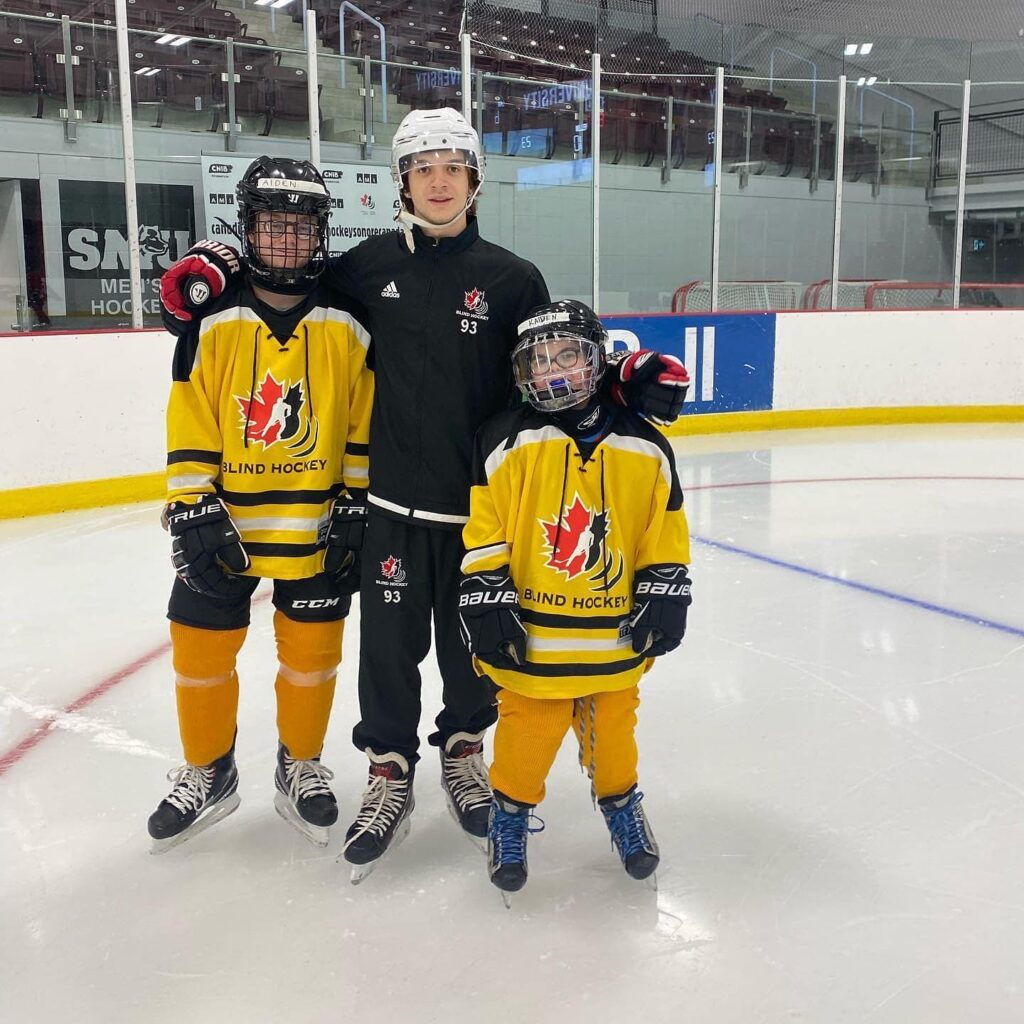
| For a while, I didn’t tell many of my friends. I told them I was sick when, in reality, my dad and I were taking a road trip to Pittsburgh to watch the Canadian National Blind Hockey Team. That trip meant more than I understood at the time. I had started playing again, but seeing that team made the dream real in a new way. That was when I set my sights on Team Canada. When I eventually made the team as the youngest Blind Hockey player ever, I was proud, but I still kept it quiet. I might have told my two closest friends, but part of me was still learning how to let people see this side of me.
My first game with the Canadian National Blind Ice Hockey series changed my life. It wasn’t only because of the win, it was because of the environment I walked into. At the time, I still felt like I was living a double life. At school, I had been told that because I took longer to finish work, couldn’t read as fast, and needed audio files and other accommodations, I might not graduate with my class. Even though I was back on the ice, I still felt held back by my disability. Then I got to Ottawa and found myself in a room with successful players and professionals like Kelly Serbu, Mark DeMontis, and Simon Richard, all people with education, careers, purpose, and pathways forward, all with eyesight similar to mine. That experience lit a fire in me. For the first time, I started to see my disability as part of my ability.
I left Ottawa a new person. I went home, got a tutor twice a week, and graduated with my class. That moment reminded me of something hockey had taught me all along: you can get knocked down, but you do not have to stay there.
Because of my eyesight, I try not to create too many strict rules or timelines for my future. When you build the perfect fairy tale in your head, life has a way of changing the script. I started post-secondary school in communications, but when mandatory classes could not make the accommodations I needed, I began exploring my own way of communicating – and that became TikTok. I started posting daily videos about my life as a university student. Then, before the Halifax camp in 2022, I posted a Day in the Life as a member of Canada’s National Blind Hockey Team, and it went viral, reaching more than 400,000 views.
For so long, I thought being blind was something I had to hide behind. Then the very thing I was afraid to share became the thing that helped me connect with people. Classmates even admitted they didn’t know I was blind at school. What I once saw as a reason to stay quiet became a reason to speak louder.
Today, I’m still creating, still sharing, and still chasing the game that shaped me. I’m a motivational speaker, a member of Canada’s National Blind Hockey Team, and someone who has spent the last couple of years documenting the hard parts too — including injuries and setbacks. Those setbacks have pushed me to work harder than ever. I’m more motivated now than I have ever been to keep building myself as an athlete and as a person.
It is exciting to meet new players and see how many youth are coming up compared to when I began. If we have accomplished this much growth in the last five years, imagine what the next five can bring. The opportunities with Canadian Blind Hockey, the BHL, and the Paralympic and international movement are exciting, and I want to be part of all of it. I still think about that kid on the backyard rink, the one who just wanted to play and make his dad proud. I hope my story helps someone else believe they can find their way back to the game, too.
- Joe Fornasier, #93 on the Canadian National Blind Hockey Team
|
|
|
|
|
|
|
|
|
|
|
|
|
|